

Anion Gap Low: 8 Key Facts Every Patient Should Understand

Table of Contents
Introduction
Like many of my patients, if you’ve had blood tests done and your report says “anion gap low”, it’s very normal to feel anxious. The words sound technical and if you start googling you might find something about acid balance, kidneys, cancer or rare hematological diseases.
Anion gap low is also a common search term among Googlers, so let’s dive into the search term and find out what it’s really about.
In this article, I will tell you exactly what anion gap low means in plain language and why it is actually quite rarely dangerous or acute. I will tell you what medical conditions it may be related to and when you should consult your doctor.
What is the anion gap, in simple terms?
Your blood contains anions and cations, also called electrolytes. The most common and clinically used of these are sodium, potassium, chloride, and bicarbonate. The anion gap is a calculated number based on some of these electrolytes.
The most common formula is:
Anion gap = Sodium – (Chloride + Bicarbonate)
As explained in StatPearls [1].
In normal healthy patients this value is positive. This is due to the calculation method where only sodium, chloride and bicarbonate are included. The blood itself is electrically neutral, but this value is positive because large anions such as proteins (mainly albumin), phosphates and organic acids are excluded from the calculations, as described in the NEJM acid–base review [2].
Laboratory values vary from laboratory to laboratory, so what counts as “anion gap low” depends on your lab’s reference interval. This variation is described in StatPearls [1] and a PubMed review [5].
In general “anion gap low” is more of a diagnostic tip — it is not specific to any disease. It helps doctors interpret blood chemistry better, naturally in relation to your clinical situation.
What does “anion gap low” actually mean?
Reference values are defined to cover the majority of the population. If lab tests show “anion gap low”, it simply means that your value is below the lab reference value. According to previous understanding, 8 mmol/L was considered low, as explained in the classic JAMA study [4]. With modern ion-selective electrode analysers, reference ranges have generally fallen, and values near or below 3 mmol/L should be considered distinctly low, while values near zero or negative are very uncommon [5]. These very low values are mainly found in difficult metabolic disorders such as intoxications or abnormal proteinemias, as suggested in the monoclonal gammopathy study [6].
However, the most important thing is to assess the patient’s value based on their clinical condition:
- What are the patient’s albumin and protein values?
- Is the patient taking cationic medications such as lithium?
- Whether the patient has a liver, kidney or immune disease
Doctors assess the patient’s clinical condition as a whole, not just the phrase “anion gap low” in isolation.
How common is a low anion gap?
In my work, I very rarely encounter an anion gap low value. A very low anion gap is very rare. It is usually a one-time occurrence, but less often recurring.
- In a classic JAMA study of over 67,000 electrolyte panels at Massachusetts General Hospital, only 0.8% of results showed a low anion gap (<8 mEq/L), and only 19 patients had it consistently low [4].
- A hospital-based study found decreased anion gap values in about 2.9% of hospitalized patients [3].
A clinically very low value is most often due to a measurement error or, less commonly, a complicated medical condition that requires assessment. This is why we usually repeat the very low value, as the JAMA study [4] suggests.
Main causes of anion gap low
Lab or calculation error (a very common reason)
As mentioned earlier, many anion gap low results are due to laboratory errors. This is emphasized in both the JAMA evaluation study [4] and in the AJCP analysis of negative anion gap [8].
In clinical settings, often the error is in the calibration of the measuring instrument. Errors related to sample storage are also fairly common. Sometimes certain substances may interact with sodium or potassium measurements, lowering the result.
Therefore, I would recommend repeating the examination if no clear clinical cause is found, as highlighted in the JAMA study [4].
Low albumin: the most frequent real cause
Albumin is a large and strongly negatively charged protein that accounts for the majority of unmeasured anions, keeping the anion gap mostly positive, as explained in StatPearls [1] and the NEJM review [2].
For every 1 g/dL drop of albumin, the anion gap drops by approximately 2.5 mmol/L [1].
Albumin drops in several different medical states:
- Chronic liver disease
- Renal failure, nephrosis, acute kidney injury
- Inflammatory conditions and critical illnesses
- Malnutrition
In studies of critically ill patients, hypoalbuminemia is the most common cause of a low anion gap, as described in the acute care review [12].
Extra positively charged proteins (paraproteins)
Abnormal proteins in the blood may change the anion gap, especially positively charged proteins. Monoclonal gammopathies are one group of diseases where this can happen. In these diseases, white blood cells produce large amounts of a single immunoglobulin. Immunoglobulins with a net positive charge can reduce the anion gap.
This relationship is documented in the monoclonal gammopathy study [6]. It is worth noting that the anion gap is not a sensitive diagnostic tool for all gammopathy subtypes — the effect appears most consistently in IgG and IgA gammopathies, while light chain variants show no consistent trend.
If the anion gap is repeatedly low, especially when albumin is normal, as discussed in the CJASN review [9], the following further tests are often performed:
- Serum protein electrophoresis
- Immunofixation
- Light chain assay
Extra cations: lithium, bromide, iodide
Lithium
Some of my patients take lithium. Lithium may lower the anion gap when blood levels are high. In particular, very low anion gaps are often found in lithium intoxication, as explained in the JAMA Internal Medicine paper [7].
Bromide and iodide
Bromide and iodide ions closely resemble chloride. Some laboratory instruments may therefore display an incorrect low anion gap value. StatPearls [1] supports that increased unmeasured cations and certain measurement interferences can lower the anion gap.
In rare situations, high concentrations of magnesium and calcium ions can also lower the anion gap.
Negative anion gap
A negative anion gap is extremely rare. The AJCP negative anion gap study [8] reviewed over 340,000 patients and found:
- Negative AG occurred in 0.046% of adult samples
- Laboratory error was uncommon, accounting for only 1.3% of negative AG cases
- The most common associations were malignancy and hypertriglyceridemia, with multiple myeloma identified in 4 patients
So in situations where the anion gap is negative, the appropriate first step is still to repeat the test — but a persistent negative value warrants clinical investigation for underlying disease.
Is an anion gap low dangerous?
Actually, the most dangerous pattern is a high anion gap. This can occur in difficult metabolic conditions such as acidosis. Observational studies show that high AG is associated with worse outcomes in post-cardiac arrest and critically ill patients [10].
Conversely, a low anion gap is usually not harmful to the patient. However, it may indicate:
- Low albumin
- Laboratory variation
- Positively charged protein disorders
- Lithium toxicity
Thus, anion gap low acts more as a diagnostic tip than a medical emergency. This is confirmed by both the CJASN acid–base review [9] and the acute care testing article [12].
Checklist for how doctors can determine the significance of anion gap low value
Step 1: Confirm the result
First, I recommend retesting the electrolytes. This is a standard procedure, as recommended by the JAMA study [4] and the AJCP analysis [8].
Step 2: Check albumin, total protein, chemistries
In my clinical experience, low albumin often explains the value [1].
Step 3: Review medications
Next, the patient’s medications should be examined. Lithium in particular can be a cause for concern, as explained in the JAMA IM lithium toxicity paper [7].
Step 4: Screen for paraproteins (if persistent)
Especially if the patient’s anion gap is less than 2–3 and albumin is normal, the possibility of a monoclonal gammopathy should be considered, as suggested by the gammopathy study [6] and the CJASN review [9].
Step 5: Interpret in the patient’s clinical context
The anion gap describes only one data point in the overall assessment of the patient. This approach is emphasized in the NEJM review [2].
What can you do as a patient?
Don’t panic — but don’t ignore it
There is no need to panic, as most causes are completely benign.
Ask your doctor good questions
Ask your doctor whether the test should be repeated and whether albumin was checked.
Provide your full medication list
Find out if your medication list includes lithium.
Focus on underlying conditions
Determine any possible medical condition, such as liver cirrhosis, kidney disease, inflammation or malnutrition.
If you are also interested in other blood values, check out my recent guide on MPV in blood tests.
Quick FAQs about anion gap low
“My anion gap is low but I feel fine. Should I worry?”
Usually there is no need to worry — this is most often an artifact or explained by low albumin. This aligns with the JAMA study [4].
“Can dehydration cause anion gap low?”
Not usually. Severe dehydration can raise lactate, which tends to raise the anion gap rather than lower it, as explained in the NEJM review [2].
“Is anion gap low a sign of kidney failure?”
Not typically. Advanced kidney failure more often contributes to a high anion gap, but associated hypoalbuminemia and other factors can complicate interpretation [1].
“Can diet fix anion gap low?”
Not usually. Diet alone will seldom correct a low anion gap, and even then only if it is due to low albumin. Other causes generally require medical evaluation.
Further Reading on Laboratory Tests
The anion gap is only one calculated value within a much broader set of laboratory findings. Readers seeking a more detailed, professional-level overview of diagnostic and laboratory testing may find a general reference book useful for understanding the terminology and principles involved.
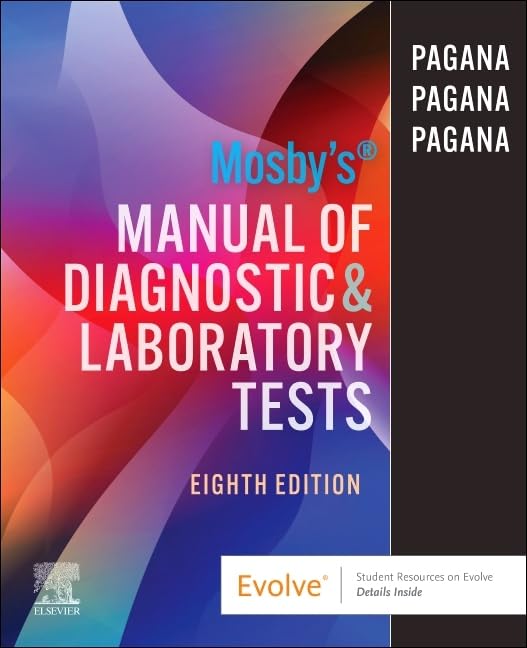
Mosby’s Manual of Diagnostic and Laboratory Tests, 8th Edition is included below as one example of a comprehensive laboratory reference. It is primarily intended for students and healthcare professionals and is not necessary for most patients. A reference book cannot account for an individual’s symptoms, medications, laboratory methods, or complete medical history and should not be used for self-diagnosis.
If you purchase a product through these links, I may earn a commission. This doesn’t cost you anything, but it helps me maintain this page so I can continue to share free information with the world. As an Amazon Associate, I earn from qualifying purchases. Product links are provided for informational and convenience purposes only. Their inclusion does not constitute medical or nutritional advice or a personalized recommendation.
Bibliography
[1] https://www.ncbi.nlm.nih.gov/books/NBK539757/
[2] https://www.nejm.org/doi/full/10.1056/NEJMra1003327
[3] https://pubmed.ncbi.nlm.nih.gov/6821931/
[4] https://jamanetwork.com/journals/jama/article-abstract/369649
[5] https://pubmed.ncbi.nlm.nih.gov/11369334/
[6] https://cjasn.asnjournals.org/content/6/12/2814
[7] https://jamanetwork.com/journals/jamainternalmedicine/article-abstract/607322
[8] https://academic.oup.com/ajcp/article/156/Supplement_1/S16/6413073
[9] https://pmc.ncbi.nlm.nih.gov/articles/PMC3817910/
[10] https://www.nature.com/articles/s41598-022-11081-3
[12] https://acutecaretesting.org/en/articles/clinical-aspects-of-the-anion-gap


